A startup based in Southern California, Vast, has declared its intention to introduce the world's initial commercial space station.
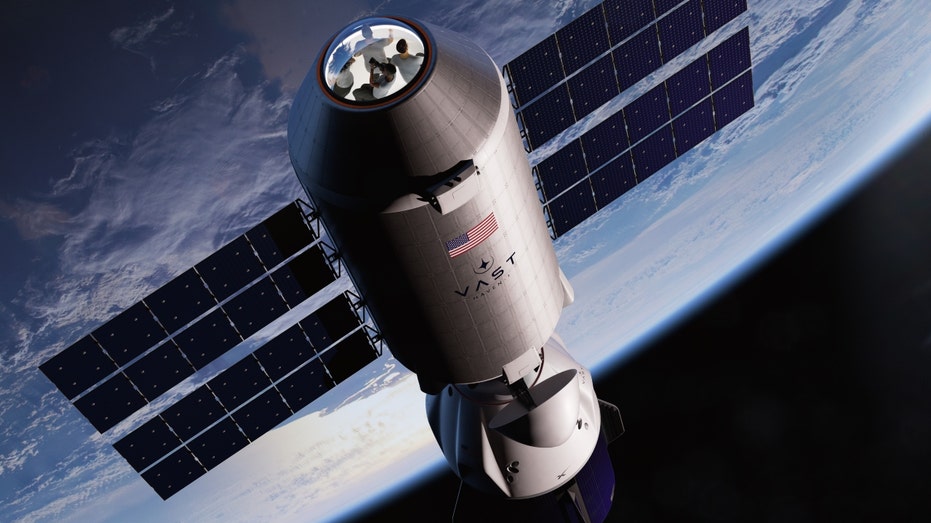
A startup in southern California focused on aerospace has revealed its intention to launch the first-ever commercial space station. Vast Space LLC has named it Haven-1, which will function as a separate crewed space station before being integrated as a module into a bigger Vast space station that is currently being developed. The launch is planned for August 2025, using a SpaceX Falcon 9 rocket to take it to low-Earth orbit.
After the mission, the next step would be Vast-1, which is the initial human space travel to Haven-1 using a SpaceX Dragon spacecraft.
The flight would consist of four crew members who would connect with the station and remain in orbit around the Earth for up to 30 days. This information was provided by Aerospace Corp.
The CEO anticipates a group of AI-managed satellites with hyper-intelligence, similar to HAL 9000. Vast has also obtained the opportunity for another human space journey to Haven-1 through SpaceX.
This place is called Haven-1.
The speaker mentioned their desire to create several stations that will eventually link to a bigger one where individuals can reside for extended periods. Vast's website outlines a plan that emphasizes the necessity of artificial gravity habitats for humans to expand their presence in the solar system and beyond.
President Max Haot, who founded and was CEO of Launcher before it was acquired by Vast this year, stated that while the development of artificial gravity and a larger spinning space station is important, they also acknowledge the necessity of taking a preliminary step.
Despite being a new company, the announcement made on Wednesday has been anticipated for a while, and McCaleb emphasized the significance of Vast's collaboration with SpaceX.
He stated that Haven is being designed to align perfectly with Dragon's capabilities, thanks to the close collaboration between their teams. He also mentioned that both companies can benefit from each other's strengths.
The 14-ton space station is just the beginning, as Haot wants to ensure that it is created quickly in order to establish the world's first commercial space station. The leaders are aiming for a basic version of a space station, keeping things simple to meet their timeline. Haot noted that Dragon serves more as a lifeboat for the International Space Station. On April 25, 1990, the Hubble Space Telescope was placed in orbit by the Space Shuttle Discovery.
The speaker mentioned that SpaceX and their team are dividing the task of creating the life support system to expedite the process. Haven-1 is an addition to Dragon. The cost of a seat on Vast-1 was not revealed, but the mission can be purchased either per seat or as a four-person crew mission.
According to Haot, Vast's pricing strategy is likely to be fair. The target audience for their services includes both local and foreign space agencies, as well as individuals engaged in scientific and charitable endeavors. It is worth noting that Haven-1 will be launched to a higher altitude than the International Space Station and will have the capability to avoid collisions.
The launch is scheduled a month or two earlier than the time when individuals would typically be sent up.
According to McCaleb, in case of any mishap, it is effortless for them to swiftly enter the Dragon and leave the station.
Vast is located in Long Beach and has a facility spanning 115,000 square feet for module construction, along with a workforce of 140 individuals.
Haot stated that the assembly will not commence before August of the following year.
The ultimate objective is to create a spinning artificial gravity space station consisting of multiple modules, with a length of 100 meters, which will be launched by SpaceX's Starship rocket.
SpaceX is offering training for crews on the Falcon 9 and Dragon spacecraft, as well as emergency readiness, exercises for entering and exiting the spacecraft and spacesuits, and simulations for both partial and complete missions.
The startup Vast is aiming to become part of the ecosystem that will replace the ISS, with NASA as their target customer. However, there are potential risks involved in human spaceflight, such as delays, malfunctioning modules, and crew safety concerns. Vast plans to mitigate these risks by implementing best practices and utilizing the experience of SpaceX, who will only dock with their module if all data and control measures are adequate.