According to experts, the recent climate action taken by Biden poses a threat to the power grid of the United States.
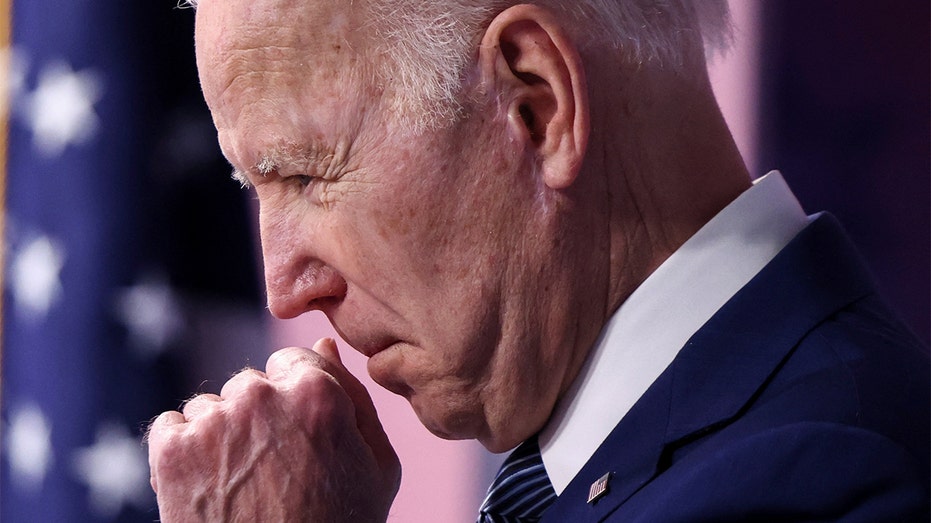
On Thursday, the Biden administration unveiled a comprehensive strategy to reduce greenhouse gas emissions from power plants that rely on fossil fuels, which has raised concerns among experts regarding the future of the United States.
Reliability of the power grid.
The EPA's proposal aims to reduce power sector emissions by approximately 617 million metric tons until 2042, requiring electric power companies to decrease pollution by around 90% within the next 20 years.
In order to significantly decrease emissions, power plants have two options: either implement the expensive and developing technology of carbon capture, or cease operations altogether.
According to Daniel Turner, the founder and executive director of Power the Future, the electricity supply in America is becoming more inconsistent due to the quick shift towards unproven wind and solar energy sources. This was stated in an interview with Fox News Digital.
He continued by saying that it is clear that the Biden administration does not have a complete energy strategy.
Their desire is for all individuals to possess electric vehicles, electric hot water heaters, and electric stoves.
The Republican states are planning to take legal action against Biden's power plant regulations because they believe that it is contradictory to promote electrification as the sole source of power while simultaneously reducing the production of that power. Biden's climate agenda aims to establish a power sector that is completely free of carbon pollution by 2035, and his administration has implemented policies that support renewable energy sources such as wind and solar farms.
Despite the significant growth of green energy, which has been supported by advantageous federal and state incentives, it only accounts for 14% of the total energy produced in the United States.
Electricity is sometimes not available and its availability is affected by weather conditions.
According to the Energy Information Administration, solar panels and wind turbines generate only 25% and 34% of their stated capacity, respectively.
In contrast, coal, natural gas, and nuclear power plants generate electricity at 49%, 54%, and 93% of their maximum capacity, respectively.
Experts are warning that the Texas government's actions could potentially hinder the development of new fossil fuel generation and destabilize the grid. This is in response to the EPA's proposal on Thursday in the United States.
According to the analysis, the production of electricity from coal plants that do not use carbon capture technology will decrease by 67% by 2030 and completely stop by 2035. On the other hand, coal plants that use carbon capture technology will see an increase of 29% and 13% by 2030 and 2035 respectively. Brent Bennett, the policy director at the Texas Public Policy Foundation's Life:Powered initiative, stated in an interview that by 2035, all coal plants will have to make changes.
The scenery is beautiful outside.
The actions they are taking appear to be mostly ambitious. Bennett agreed with Turner and stated that the power industry must grow, not decrease, to accommodate the greater demand from electrification across the economy. The EPA recently announced its most ambitious regulations yet, aimed at reducing tailpipe emissions and promoting the use of electric vehicles.
The United States, though.
According to federal data, the transportation industry uses approximately 30% of the country's yearly energy consumption. This indicates that power producers will have to increase their energy production significantly as the industry shifts from using petroleum to electricity.
Bennett stated that their plans for electrification have the potential to increase the country's electricity demand by twice the current amount.
Simultaneously, we are attempting to close power facilities and requesting individuals to reduce their electricity usage.
It's utterly ridiculous.
This is essentially a plan to address the shortage of energy.
Experts are warning that California's power grid is at risk of collapsing due to the push for renewable energy and electric vehicles by leaders. At a Senate hearing, all four members of the Federal Energy Regulatory Commission expressed worry about the premature shutdown of coal-fired power plants. There seems to be no other way to describe the situation.
Commissioner James Danly expressed his concern that the consequences of mandatory retirements would be disastrous. Additionally, in December, the highest-ranking official in the United States also shared this sentiment.
The grid watchdog warned that the nation could face further shortages in capacity due to the retirement of fossil fuels.
Bennett, Turner, and Sterling Burnett, who is the director of the Robinson Center on Climate and Environmental Policy at the Heartland Institute, expressed skepticism about the Biden administration's ambitious proposals for large-scale carbon capture.
Only the Boundary Dam Power Station in Canada is currently implementing carbon capture technology on a large scale, despite power companies' intentions to make significant investments in this area.
Considering the costs and energy requirements, carbon capture and storage cannot be considered as the most effective technology or system for reducing emissions, as its viability has not been demonstrated.
Burnett stated that the Biden EPA is aware that the approach has been unsuccessful in all the places where it has been attempted.
On Thursday, power industry associations cautioned that the EPA's proposition could jeopardize the dependability of the power grid, contending that the agency's standards were excessively ambitious.
Rules and guidelines should be based on what is practically achievable through technology and what is commercially accessible.
According to Marty Durbin, the president of the U.S, exceeding the limits set by this regulation could potentially jeopardize the reliability of electricity and result in energy prices that are too high to sustain, ultimately causing harm to the entire economy.
The Global Energy Institute of the Chamber.
The president and CEO of America's Power, Michelle Bloodworth, stated that shutting down coal plants too soon would increase the likelihood of power outages. Todd Snitchler, the President and CEO of the Electric Power Supply Association, also commented that policy goals are being prioritized over practical considerations. To access the Fox News app, click on the provided link.
The implementation of these strict regulations will inevitably result in increased energy expenses and a significant amount of power plants being shut down. This is concerning as experts have already cautioned that we are experiencing a reliability crisis due to the rapid retirement of reliable energy sources. It is important to note that the reliability of the electric grid is not a matter of political affiliation or beliefs.
Politics do not affect the grid.
He stated that if the system fails to produce and distribute enough energy to meet the demand consistently, it will be a loss for everyone.