May 14, 1973 marks the historical launch of Skylab, which was the initial space station of the United States.
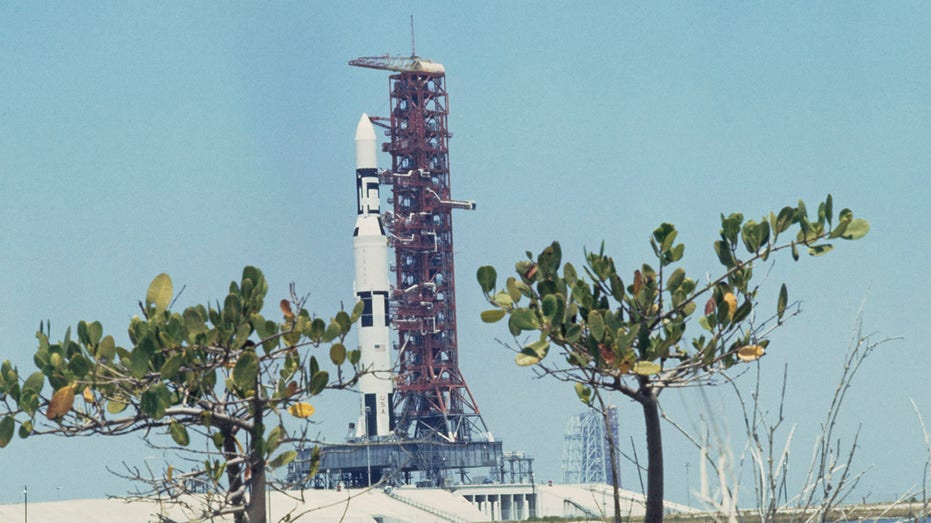
On May 14, 1973, Skylab, the initial space station of America, was sent into the orbit of Earth.
According to NASA's Skylab website, an unmanned space station was launched into space from Florida's Kennedy Space Center using a modified Saturn V rocket. This event also marked the final use of the Saturn V rocket in spaceflight, as reported by Space.com.
On May 13, 1981, Pope John Paul II was able to avoid being assassinated. However, the launch of the space station encountered some issues as vibrations during liftoff caused technical difficulties, according to the NASA website.
According to the website, a crucial shield designed to protect the spacecraft from meteoroids was torn off, causing one of the solar panels to detach. Additionally, a fragment of the shield got entangled around the other panel, preventing it from opening. To avoid exposing the Skylab crew to extreme heat caused by the absence of the shield, NASA engineers rotated the spacecraft to reduce the temperature inside the workshop.
April 25, 1990 marked the day when the Hubble Space Telescope was put into orbit by the Space Shuttle Discovery. NASA reported that the Skylab 2 mission, which sent the first crew to Skylab, was postponed for 10 days to train the astronauts on how to reduce the damage caused to the space station during liftoff. Eventually, Skylab received its initial three-man crew on May 25, 1973.
Pilot Paul J was accompanied by Commander Charles "Pete" Conrad.
Joseph P and Weitz, who is a science pilot.
NASA stated that Kerwin would remain on Skylab for the complete duration of the 28-day mission.
During their journey to space, the crew accomplished several historic feats. On July 29, a significant event occurred when President Eisenhower signed a bill that established NASA. On the 14th day of their space mission, which was June 7, 1973, Conrad and Kerwin exited Skylab's Airlock Module.
According to NASA, a 25-foot pole was erected with a tool at the end capable of cutting cables. The tool was used to partially close over the aluminum strap that was securing the solar array to the micrometeoroid shield.
On April 17, 1970, the Apollo 13 astronauts defied the odds and returned alive after a space explosion. They attempted to free stuck solar panels by attaching a rope and using a cutter tool. The solar wing partially opened but was frozen in space preventing it from fully opening. The astronauts overcame the frozen hinge and the wing sprung fully open during a successful repair spacewalk, setting a record for the longest spacewalk. They also set a new record for the longest human space flight and were the first astronauts to return alive from a mission to a space station. Margaret Hamilton, a computer whiz and mom, wrote the moon-landing software.
The crew of the first space station, Salyut 1, died when they returned to Earth. Skylab, which was the second space station, remained in space until it broke apart in the Earth's atmosphere on July 11, 1979. Some parts of Skylab were discovered in Australia and the Indian Ocean, and NASA was even fined by an Australian town for littering.
According to NASA, the space station has been empty since February 1974, when the Skylab 4 crew returned to Earth. The ISS is a collaboration between five space agencies from 15 countries, each contributing various components to its construction.
The International Space Station (ISS) is currently circling around the Earth at an average height of 248 miles (400 kilometers).
According to Space.com, the station completes a full orbit around the Earth every 90 minutes, and within a day, it covers a distance equivalent to a round trip from Earth to the moon.
The source suggests that the International Space Station can be seen from Earth at night, and it appears as a bright moving point of light that is as bright as the planet Venus. To access the Fox News app, click on the provided link.
Night sky observers who are aware of the appropriate time and location can spot the ISS without the aid of a telescope. The ISS is a collaboration between five space agencies from 15 nations, each contributing distinct components, according to Space.com.
The International Space Station is made up of components that were supplied by the United States, Russia, Japan, Canada, and the nations that make up the European Space Agency.