Stay healthy by scheduling routine eye examinations to safeguard your eyesight and detect any potential indicators at an early stage.
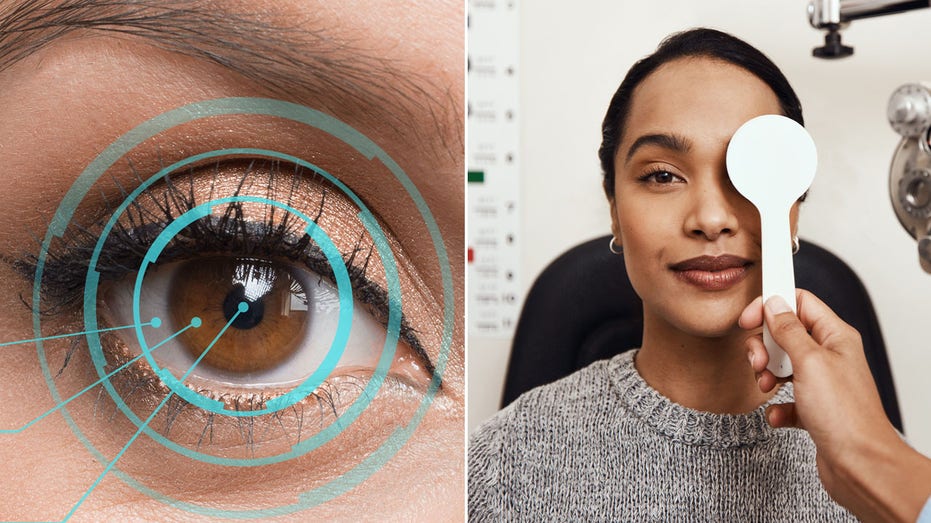
A study conducted by VSP Vision Care and market research agency YouGov revealed that although many people recognize the significance of maintaining healthy eyes, only 50% of them undergo yearly eye check-ups.
The American Optometric Association (AOA) suggests that individuals between the ages of 18 and 64 should have an annual eye examination, similar to how they would schedule regular dental cleanings and physicals.
In an email to Fox News Digital, Pamela Riedy, who works as an optometrist in Chesterfield, Missouri and holds the position of vice president of patient care at Visionworks, stated that...
A woman from Mississippi who had been blind in her right eye for a long time has regained some of her vision, which she finds "pretty cool". Eye exams are crucial not only for clear vision but also for overall health. During an eye exam, the eye doctor can see the blood vessels and optic nerve, which is connected to the brain. This allows them to detect early signs of over 270 chronic health conditions, including diabetes, high blood pressure, and certain cancers. Therefore, eye doctors are often the first to notice these signs.
Eye doctors are capable of identifying glaucoma, cataracts, and macular degeneration during routine exams, in addition to chronic conditions. These three conditions do not exhibit early warning signs, making it crucial to undergo an annual eye exam to detect them early and prevent any damage to vision. The exam involves several tests to evaluate the visual system and overall eye health.
The visual acuity test is likely the most recognizable aspect of the examination. During this test, the physician will request that you read letters on the "Snellen chart" that decrease in size from a distance of 20 feet.
The possibility of bacterial contamination in eye drops is not limited to a specific location. To prevent it, one can take certain measures. When glasses or contacts are required, the doctor will conduct a refraction test to determine the appropriate lens prescription.
At this point, you will be requested to evaluate and contrast the lucidity and efficiency of various lenses ("which one is superior, 1 or 2?").
According to Healthline, the health of the eyes and nervous system will be assessed by the eye doctor through a brief examination of the pupils.
According to Verywell Health, the next test is called non-contact tonometry (NCT) or the "air puff test." It is utilized to determine the pressure inside the eye and can aid in identifying glaucoma.
Riedy stated that further examinations might involve assessing color vision, depth perception, peripheral vision, retina function, and eye movement and focusing.
According to the statement, eye specialists can identify indications of over 270 long-term health issues. The speaker suggested that there is no need to get ready for the test in advance, but rather to select a suitable optometrist and arrange the appointment at a convenient time.
At Visionworks.com, you can utilize an internet-based booking system that allows you to input your zip code and locate a service provider within your vicinity.
Riedy cautioned that digital eye strain can be caused by frequent exposure to blue light emitted from electronic devices and provided tips to reduce it.
She clarified that blue light is a type of light that has the greatest energy level within the visible light spectrum.
Doctors are cautioning against the dangerous trend of "beezin'" where people apply lip balm to their eyelids. To counteract the negative effects of blue light, Riedy recommends following the "20/20 rule" which involves taking a break every 20 minutes to look at something at least 20 feet away for 20 seconds. This rule should be practiced by both adults and children.
Your physician may suggest an anti-reflective coating that reduces blue light for your lenses while conducting an eye examination.
To subscribe to our health newsletter, click on the provided link. According to Riedy, it is advisable to maintain a comfortable distance from your computer screen while working.
She suggested that kids should keep their devices at a comfortable distance from their eyes.
It is recommended that grown-ups keep their gadgets at a distance from their bodies. You can also decrease the quantity of blue light that you are exposed to by lowering the brightness of your device's screen. Click here to download the Fox News app.
For additional articles in Fox News Digital's "Be Well" series, click on the provided link.