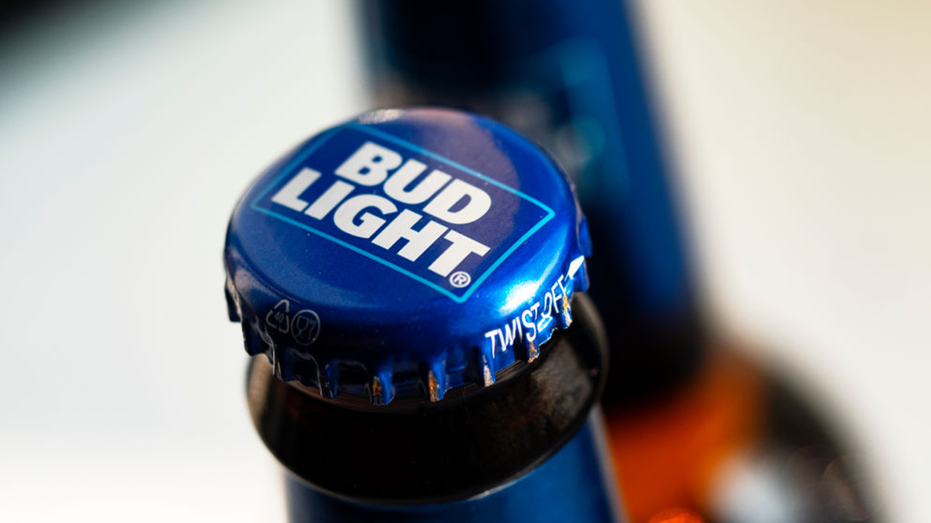
The issue surrounding Bud Light is persisting and there are reasons for it.
The common belief is that disputes eventually subside, media coverage moves on, and protesters become less vocal.
Anheuser-Busch is hoping for this outcome amidst the controversy surrounding its collaboration with transgender activist Dylan Mulvaney.
During the Q1 earnings call, Anheuser-Busch CEO Michel Doukeris stated that it is still too soon to have a complete understanding of the situation. However, he also mentioned that the company's EBITDA growth outlook for the entire year remains the same. Despite this, sales of Bud Light have continued to decline after five weeks.
The sales for this year have decreased by 17% compared to the same time in 2022.
It seems that the Bud Light controversy will continue to be a topic of discussion.
Is it not possible? The solution may lie in the field of social science.
Business school researchers have been investigating the reasons behind the success or failure of certain consumer boycotts for a considerable amount of time.
The outcomes are revealing.
The situation is not favorable for Anheuser-Busch. A former executive of the company criticized Bud Light for being "inauthentic" and losing touch with the consumers. It is important to consider if consumers feel they can influence the company's profits.
There is no reason to boycott if it would be ineffective.
The success of Bud Light is being observed by their customers as it happens.
Most companies usually disclose their sales figures every three months or once a year, with a considerable time lag. However, Bud Light sales are made public every week.
Anheuser Busch has limited options as the data is obtained from a trade magazine through surveys sent to various retail stores.
The media frenzy cannot be subdued by Anheuser-Busch withholding information.
The expense of the boycott for potential buyers is also a factor to consider. Studies indicate that the success of a boycott depends on two main factors: the consumers' fondness for the boycotted item and their ability to find alternatives. If it is simple to switch to a rival product, boycotts can be maintained more easily.
This is supported by actual instances in real life.
The 1995 Shell boycott is often referred to as a prime instance of a successful boycott, as consumers refused to purchase Shell gasoline due to the company's intention to submerge an oil platform in the Atlantic Ocean.
One important aspect was that the boycott did not have a significant impact on consumers' expenses as the price of gas was the same everywhere, and switching to another gas station was not expensive.
HSBC has downgraded the stock of the parent company of Bud Light due to a significant drop in sales and a branding crisis. Boycotts are usually unsuccessful when it is difficult to switch to an alternative product.
Disney has made a choice to involve itself in a political discussion with the governor of Florida, Ron DeSantis.
Although some dissatisfied customers urged for boycotts, Disney's revenues in 2022 increased by 22.7% compared to the previous year.
Did Disney's customers have any other options? Will parents stop taking their children to Disney World? Or will they follow the example of those who boycotted the NFL after Colin Kaepernick knelt during the national anthem?
Numerous outraged supporters rushed to Twitter to declare that they would never watch football again.
However, they accomplished it.
The Super Bowl of this year had the highest viewership ever recorded. Bud Light stands out from others.
In terms of beer, it is not especially distinctive.
If you pour a Bud Light into a Solo cup without any label, many individuals would not be able to tell the difference between it and a Coors Light, Miller Light, or Pabst Blue Ribbon.
Consumers do not have a strong inclination towards taste alone. Bud Light's appeal lies in its non-offensive, generic and easy-to-like nature.
The appeal has disappeared.
However, some other brands have managed to maintain their non-controversial reputation.
It is probable that the reason for the decrease in Bud Light's sales is the same reason why Coors and Miller have experienced a sales increase of 20.5% and 21% in the third week of April, respectively.
While it may not be difficult to go to another gas station, opting for an alternative beverage from the beer fridge at 7-Eleven is even simpler.
To receive the opinion newsletter, click on the provided link. Bud Light's declining sales can be attributed to a reason that many commentators overlook. The boycotts against Bud Light are not solely driven by radical extremists, but rather the most politically devoted customers are the most unhappy with the brand's recent strategy.
The most boisterous.
Although there are instances of Kid Rock shooting at Bud Light cans on Tik Tok or a gay bar publicly rejecting the brand for not being inclusive enough, there are many Americans who simply do not want their beer preference to be associated with any political stance, whether it be pro-trans or anti-trans. This group of people just wants to enjoy their beer without any political implications.
During the recent earnings call, the CEO of Anheuser-Busch hinted that the discussion should not revolve around the beer. However, the beer remains the main topic of discussion.
It appears that the situation is unlikely to change in the near future.
The Bud Light controversy is not just another issue that has sparked debate in the ongoing cultural conflicts.
This is a component of a broader change in culture.
During the years 2020 and 2021, a significant portion of the business community viewed supporting social causes as a simple method to gain favor with their clientele.
Boycotts were not common as most individuals either endorsed socio-corporate political activism or refrained from expressing their dissent due to fear. Presently, the situation has changed.
Earlier this year, a survey revealed that 68% of Americans believe that businesses that express their opinions on social issues are doing so solely for marketing purposes.
A recent study revealed that Americans tend to have less faith in institutions that they perceive as being influenced by politics, even if those institutions support their political beliefs.
In the current politically charged climate, it is best for companies, especially those in highly visible and competitive industries, to concentrate on their brand and avoid getting involved in controversial discussions. Anheuser-Busch follows this approach.
Anheuser-Busch needs to make a public declaration of abstaining from political matters in the future in order to rectify their actions.
Other companies can learn from Anheuser-Busch's mistake without experiencing the same difficulty.