The population of a small bat species is starting to increase again after being greatly reduced by a fungus, providing a small amount of optimism.
In a chilly and moist cavern located in Vermont, numerous fuzzy animals with a rich brown color are moving around.
Last autumn, the small brown bats, who managed to survive a fatal fungus that greatly reduced their numbers, entered a state of hibernation.
In the beginning of May, they are emerging from their resting places on the rock wall and attempting their initial flights to find and consume moths, beetles, and flying aquatic insects.
Scientists discovered one of the initial occurrences of the fungus responsible for white nose syndrome in North America within the intricate tunnels of a Vermont mountain.
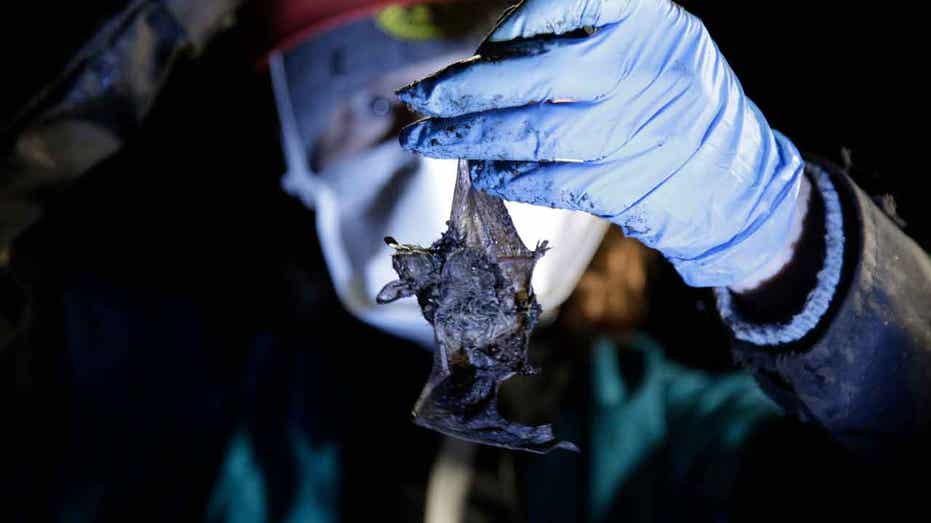
The floor of the cave is covered with bat bones, resembling the dry cuttings of a lawn mower.
If you examine more closely, you will discover small skulls.
The bats are continuing to perish.
The invasive fungus responsible for white nose syndrome was initially discovered in a cave located in upstate New York in 2006, which is only a brief flight away from the bat colony in Dorset, Vermont.
The fungus rouses bats from their hibernation, causing them to venture out into the cold winter air to look for nourishment.
During that season, they perish due to lack of insects to sustain them, leading to either starvation or exposure.
The Dorset bats are tinier than a mouse and weigh approximately three pennies when held in the hand. They scurry across the walls of the cave or huddle together to keep warm.
The health of certain species suggests that they are adjusting to the fungus that has caused the death of numerous individuals in North America.
According to Alyssa Bennett, a biologist for the Vermont Department of Fish and Wildlife, this is very important because it appears to be a central location where the bats are able to survive and then disperse throughout New England during the summer.
For over ten years, she has conducted research on bats and the white nose syndrome.
Hundreds of bats located beneath a bridge in Houston fell to the ground due to freezing temperatures, and the hope is that the remaining bats will be able to recover and repopulate the area, according to Bennett, who observed the creatures flying around.
It will require a certain amount of time.
Female little brown bats give birth to only one offspring annually.
According to Bennett, although they have the potential to live for several years, only 60% to 70% of young animals survive beyond their first year.
According to scientists, the Dorset cave in New England has the highest number of hibernating bats, with an estimated range of 70,000 to 90,000.
The population of the bats has decreased significantly from around 300,000 to 350,000 during the winter season in the 1960s, which was the last time the area was surveyed before the white nose syndrome outbreak.
The extent of the decline in numbers due to the fungus is not known, but biologists who went to the cave in 2009 or 2010 observed that the area in front of the cave was covered with dead bats.
It is thought that the fungus responsible for white nose syndrome was introduced to North America from Europe, where bats are believed to have developed a tolerance to it.
The fungus, which causes white, fuzzy spots on the noses and other body parts of bats, has resulted in the death of over 90% of bat populations in certain regions of North America.
In the previous month, a study conducted by the North American Bat Conservation Alliance revealed that 81 out of the 154 bat species identified in the United States, Canada, and Mexico are in grave danger due to white nose disease, climate change, and the loss of their natural habitats.
It is important.
The United States.
The U.S Geological Survey has made an estimation that bats provide a beneficial impact on the country.
By consuming insects that harm crops, such as moths that lay larvae that bore into corn plants, agriculture could save $3.7 billion annually.
For years, scientists have been aware that certain little brown bats were able to withstand exposure to the fungus, even though there was a concern that it could wipe out the entire population.
According to Bennett, while the little brown bats in Dorset are still present, other species such as the northern long eared or tricolor bats that were once abundant alongside them are now extremely difficult to locate.
Bennett commented that there is a unique quality to the little brown bats in Dorset.
Scientists have collaborated on genetic research that indicates certain bats possess traits related to hibernation and immune response, which enable them to withstand the disease and pass on these characteristics to their offspring. However, bats across North America are being killed by climate change, disease, and habitat loss, with the fungus responsible for white nose syndrome having been detected in 38 states, according to Winifred Frick, the chief scientist at Bat Conservation International.
Each time she learns of a new outbreak, she describes it as a blow to her gut.
Earlier this year, bats in Colorado were reported to have been infected for the first time.
Frick is glad that bats are starting to return to certain areas where there used to be a lot of dead animals, even though the increase in population is currently only a small portion of what it used to be.
She expressed that it was a genuine sign of optimism.
Besides Vermont, other regions close to the location where white nose syndrome was initially detected have also observed steady or potentially increasing populations of little brown bats.
According to Greg Turner, who is the Pennsylvania Game Commission's expert on mammals, the state of Pennsylvania experienced a population decline of approximately 99.9% due to the white nose disease.
Although the figures are presently small, they are gradually rising in certain locations.
In 2016, there were only seven bats found in an old mine located in Blair County.
There were over 330 this year.
Turner expressed that he is currently feeling at ease.
According to his research, bats that hibernate in colder temperatures have a better chance of surviving against white nose syndrome as the fungus grows at a slower pace. Therefore, he believes that the possibility of extinction is not imminent.
This could imply that the bats may not be easily disturbed by the irritation, but it is still unclear how certain animals are able to withstand it while others cannot.
According to Turner, choosing lower temperatures has two benefits: it helps in retaining fat and energy, and also reduces the risk of diseases.
However, there are concerning patterns that are present.
The number of bats in Pennsylvania has significantly decreased due to the invasion of white nose.
Turner and his colleagues have observed an increase in the number of bats in certain areas, but they have also noticed a puzzling scarcity of female bats.
The populations in Virginia have decreased by over 95%, but some colonies are beginning to stabilize or slightly increase their numbers.
According to Rick Reynolds, a non-game mammal biologist at the Virginia Department of Wildlife Resources, the occurrence is only taking place at a small number of the previously monitored locations.
Reynolds stated in an email that although they are optimistic, there is still a great deal of uncertainty and a lengthy journey ahead. To obtain the Fox News app, click the provided link.
In Vermont's Dorset cave, where winter temperatures drop to the low 40s, the bats have discovered an ideal temperature that effectively retards the growth of the fungus.
Bennett is collaborating with Laura Kloepper, who specializes in bioacoustics at the University of New Hampshire, to improve their understanding of the number of individuals in the population.
This year, they are utilizing acoustic modeling to establish a starting point for population estimation by comparing sound recordings with thermal imaging.
Next year, they will conduct a survey using the same approach in an attempt to identify any differences.
Kloepper expressed the desire to comprehend the measures that can be taken to protect bats globally, not just the ones in the cave or the particular species.