The World Health Organization (WHO) has declared that monkeypox is no longer a global health emergency.
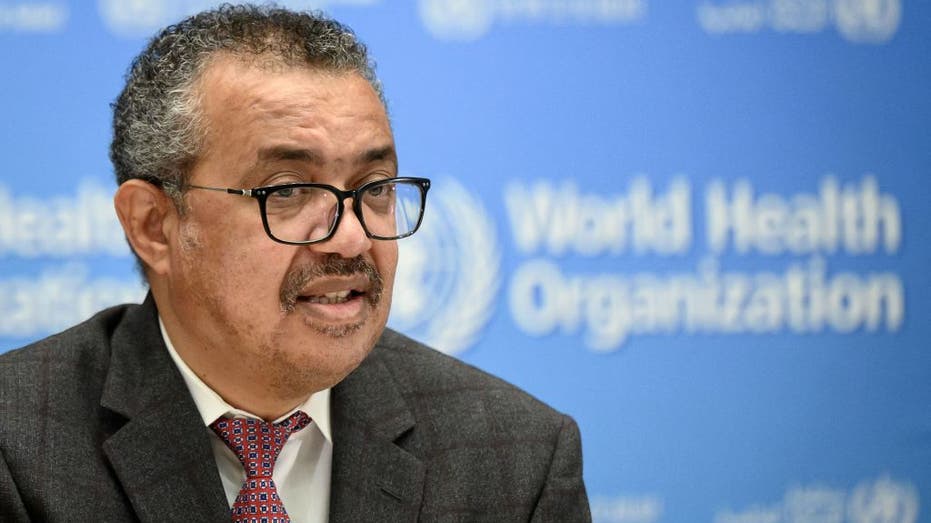
The World Health Organization (WHO) has declared that monkeypox (mpox), a contagious illness caused by the monkeypox virus, is no longer considered a global emergency after an outbreak that occurred last year.
In a press conference held on Thursday in Geneva, Switzerland, the Director-General of WHO, Tedros Adhanom Ghebreyesus, stated that there has been a decrease of 90% in the number of cases over the past three months.
The number of cases started to increase during the summer of 2022.
According to the WHO, there have been over 87,000 cases that have been confirmed and 140 deaths in 111 countries around the world.
Learn about monkeypox virus and how to safeguard yourself. The Centers for Disease Control and Prevention (CDC) reported a peak of 646 weekly cases in August 2022 in the United States. However, the number of cases has been decreasing steadily, with only one new weekly case reported as of May 10.
According to Ghebreyesus, the outbreak is being managed effectively by applying the lessons learned from HIV and collaborating closely with the most impacted communities. Despite initial concerns of backlash, this has not been a significant issue. Despite increasing racial disparities, the number of monkeypox cases has decreased, and the WHO has declared it a public health emergency as of July 2022.
The director-general stated that while he is announcing a global public health emergency, the current outbreak is primarily affecting men who engage in sexual activity with other men, particularly those who have multiple partners.
Earlier, the agency had stated that the spread of the disease originated from sexual encounters that took place at two rave parties in Europe.
The medical field is monitoring the situation, but it has been a triumph for public health. In November 2022, the WHO changed the name of the disease to "mpox" due to concerns about discrimination.
According to the CDC, the main indication is a skin eruption that may manifest on various body parts such as the hands, feet, chest, face, mouth, and/or genitals.
The rash undergoes multiple phases prior to forming a scab and recovering.
Fever, chills, tiredness, body pains, headache, enlarged lymph nodes, cough, sore throat, and blocked nose are among the typical indications.
Most individuals will experience symptoms within three weeks of being exposed, but there are some who may not show any symptoms at all.
Monkeypox can be transmitted by coming into contact with an infected individual and may sometimes be transmitted from animals to humans.
From the onset of symptoms until the complete healing of the rash, an individual can spread the infection.
The CDC advises individuals who are susceptible to monkeypox to receive vaccination as a preventive measure. JYNNEOS is a two-part vaccine that offers protection against both smallpox and monkeypox. Here are some statistics about the uncommon virus that is currently spreading.
To subscribe to our health newsletter, please click on the provided link.
The vaccine is acknowledged by Marc Siegel, who is a medical professor at NYU Langone Medical Center and a medical contributor for Fox News, for playing a significant role in putting an end to the outbreak.
According to him, the implementation of ring vaccination, which involves vaccinating individuals in close proximity to monkeypox cases, had an impact.
He stated that public education and knowledge about potential dangers have been crucial, and you can obtain the Fox News app by clicking here.
According to Siegel, the medical field is still monitoring the situation, but it has been a triumph for public health in general.