The Senate has approved a debt ceiling bill with support from both parties and has sent it to President Biden for his signature.
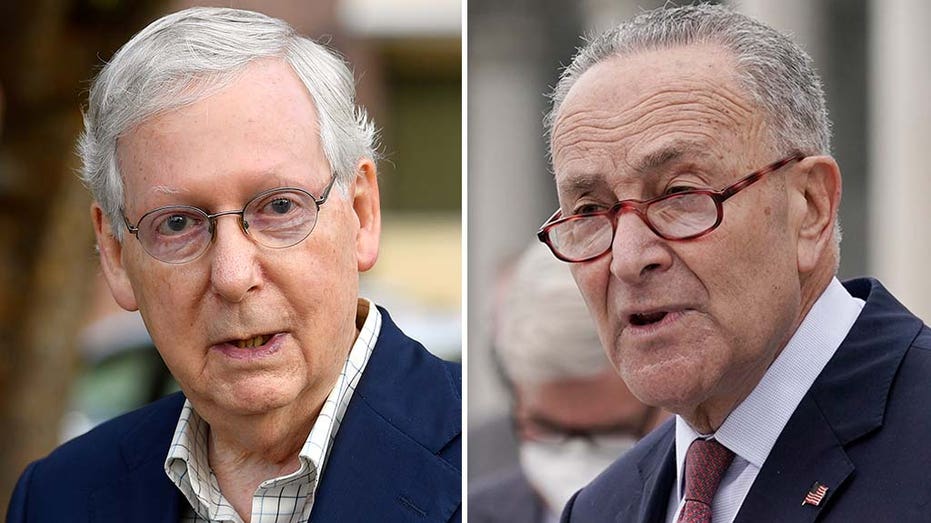
Late on Thursday night, the Senate approved a bill that would increase the government's borrowing capacity. The bill has been sent to President Biden for his signature, just in time before the government's funds were expected to run out on June 5th.
The legislation, which enacts the agreement made by House Speaker Kevin McCarthy and President Biden to increase the debt limit and reduce expenses, was approved by a vote of 63-36.
There are 4 members of the Democratic party, 31 members of the Republican party, and 1 Independent Senator.
After a period of intense negotiations between McCarthy and Biden, the House lawmakers voted 314-117 in a bipartisan manner to send the bill to the Senate. Bernie Sanders from Vermont voted against it.
The Senate was unable to pass their own bill, which left them as mere observers in the negotiations. As a result, the only viable option for senators was to approve the bipartisan agreement, which suspends the debt limit without any restrictions until January.
By the year 2025, there will be a reduction in non-defense spending to levels similar to those of fiscal year 2022. The increase in spending will be limited to 1% the following year, and there will be non-compulsory caps for the next four years.
It also recovers some funds that were intended for the Internal Revenue Service and some unused funds allocated for the COVID-19 pandemic.
The House of Representatives has approved the McCarthy-Biden agreement on the debt ceiling and sent it to the Senate, just five days before the funding deadline. The deal includes an increase in defense spending of approximately 3% in the initial year, which is lower than the inflation rate.
A number of Republican senators expressed their dissatisfaction with the agreement, cautioning that it could have negative consequences for the United States.
Security of the nation.
Senator expresses disbelief towards House colleagues for their actions.
The statement implies that the military cannot be fully funded with a defense budget that is $42 billion below inflation. Graham and other lawmakers threatened to delay the bill until they received guarantees that the defense spending would not be restricted by the agreement. Senate Majority Leader Chuck Schumer and Minority Leader Mitch McConnell provided those assurances.
According to a statement from Graham's office, the agreement ensures that the Senate will have the freedom to address national security threats as they arise, such as Russia's aggression in Ukraine, economic challenges posed by China and the threat to Taiwan, and protecting important interests and allies in the Middle East. This statement was released while the Senate was reviewing the bill.
The head of the Conservative House Caucus declined to provide a statement regarding whether its members will attempt to oust McCarthy. The Senate dedicated a significant amount of time to reaching a consensus on expediting the bill's consideration, with leaders consenting to 11 amendment votes.
As anticipated, none of the 11 Senate amendments that were suggested on Thursday night were approved. If any of them had been accepted, it could have potentially weakened the agreement made by McCarthy and Biden.
The proposal to include Republican-supported border provisions in the bill was turned down, as well as the proposal to remove the approval of the Mountain Valley Pipeline in West Virginia. The latter provision was added due to pressure from a senator.
Joe Manchin, a Democrat from West Virginia.
The senators declined a proposal to remove the provision that permits the executive branch to exempt the need for reducing expenses in other areas while implementing an expensive new regulation.
Similar to the House vote, it was anticipated that members from both political parties would break ranks in the Senate.
The bill's spending cuts have been criticized by progressive lawmakers for being excessive, while conservatives have expressed dissatisfaction with the fact that they were not extensive enough.
In a warning to Congress, Treasury Secretary Janet Yellen stated that if the debt limit is not lifted or suspended by June 5, the nation could experience a severe economic crisis.
In a tense House vote, Democrats aided McCarthy in pushing forward a debt ceiling agreement. The agreement includes a condition that mandates a 1% reduction in spending across all areas if Congress fails to pass the 12 yearly appropriations bills, which has not been a consistent occurrence in recent years.
While the legislators were discussing different amendments, the leaders of the Senate issued a statement urging Patty Murray, a Democrat from Washington and the Chair of Appropriations, as well as the ranking Republican Senator.
Susan Collins, a Republican senator from Maine, is initiating the process of assembling the 12 bills in order to prevent this reduction.
The leaders of the Senate expressed their agreement with their colleagues' worries regarding the possible consequences of sequestration. They pledged to work together in a cooperative and nonpartisan manner to prevent this outcome. Click to obtain the Fox News app.
In order to achieve our common objective of avoiding sequestration, it is necessary for Senators from both political parties to collaborate and facilitate prompt discussion on the matter. The Leaders anticipate that bills will be presented to the committee with robust support from both sides.
The Leaders will work together with Senators from both parties to ensure that these bills are brought to the floor for consideration.