The Perseverance Mars rover from NASA has taken pictures that suggest the presence of a natural river.
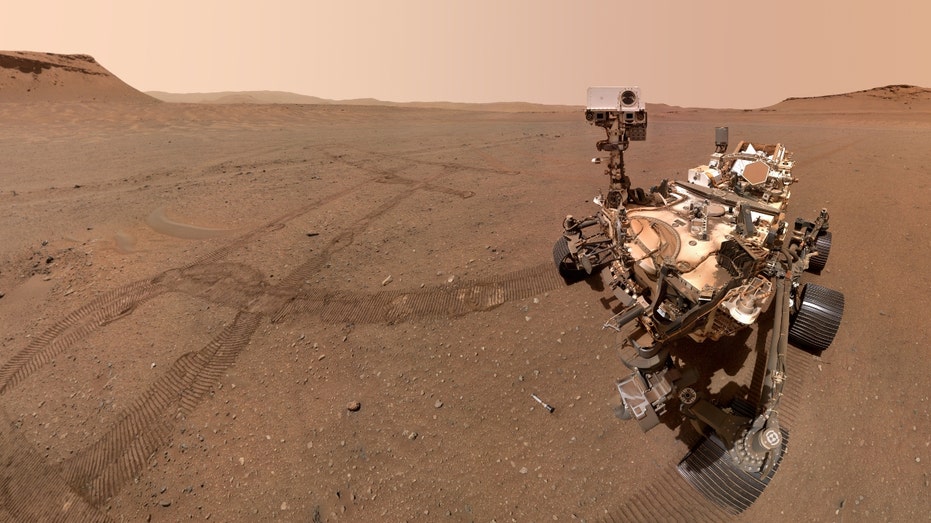
NASA's Perseverance Mars rover has captured new images that suggest the existence of a river on the red planet. According to the agency, the river was part of a network of waterways in Jezero Crater and was deeper and faster-moving than any previously discovered evidence. The rover has been exploring the crater for over two years, with the aim of detecting signs of ancient microbial life. Perseverance has been studying a sedimentary rock formation that is 820 feet tall and has features that indicate the presence of water.
A startup based in Southern California, VAST, has declared its intention to launch the first-ever commercial space station in the world. The Mastcam-Z tool on the rover captured numerous images, which were used to create mosaics that showed rough sediment particles and large stones.
These are signs of a fast-moving river with a lot of debris being transported.
According to Libby Ives, a postdoctoral researcher at NASA's Jet Propulsion Laboratory, the strength of water flow determines its ability to move larger materials. The rover has observed layered rock bands in the crater, known as the "curvilinear unit," and has imaged a specific location called "Skrinkle Haven." Although NASA scientists are certain that powerful water created the curved layers, the images have sparked questions about the type of water that caused them. It is possible that the water was either from a winding or braided river. Additionally, NASA's Ingenuity helicopter has captured a stunning image of the Martian sunset.
The curved layers seem to be arranged in rows when viewed from the ground, and they may have been the remains of a river's banks that changed position or sandbars that developed in the river. It is worth noting that the layers were probably higher in the past, but experts believe that wind erosion and carving have reduced their height over time.
There is a place called "Pinestand" which is included in the unit and is situated approximately a quarter mile away from Skrinkle Haven. It is a solitary hill that has upward curving sedimentary layers, some of which are as high as 66 feet.
The formation of the tall layers could have been caused by a strong river, but researchers are investigating other possible explanations.
NASA's group is utilizing the RIMFAX instrument, which is a ground-penetrating radar, on Perseverance to investigate beneath the surface of Mars. This marks a new phase in the history of Jezero, which is quite thrilling. Click the link to obtain the Fox News app.
Katie Stack Morgan, the deputy project scientist of Perseverance, stated that the environments on Mars are being observed for the first time.
We are considering rivers in a new way compared to our previous perspective.