Neil deGrasse Tyson, an astrophysicist, presents a positive perspective on AI, which he considers a much-anticipated power for change.
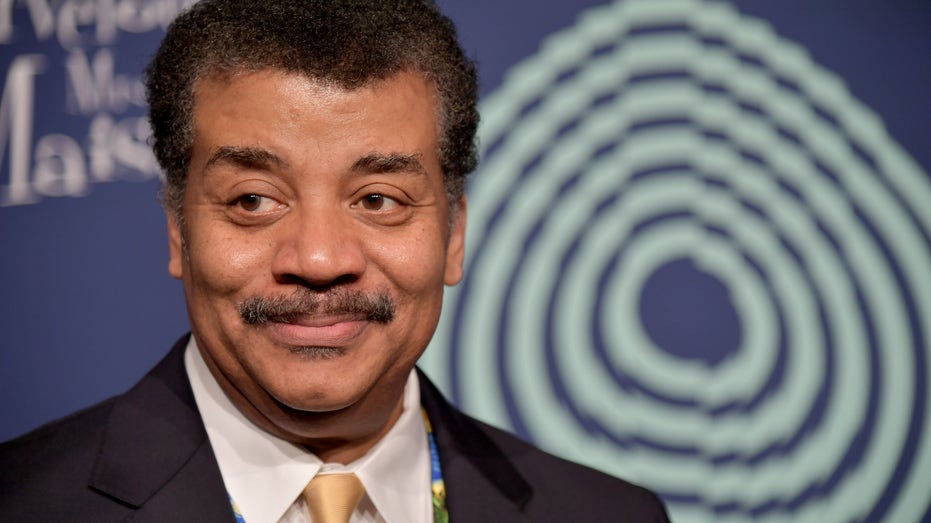
Neil deGrasse Tyson, an astrophysicist, believes that artificial intelligence can serve as a valuable test for contemporary society. He thinks that it will prompt humanity to update and improve some of its outdated concepts and structures now that the "genie is out of the bottle." Tyson stated to Fox News Digital that AI will inevitably take over certain jobs.
Since the beginning of the industrial era, technology has caused entire sectors of our economy to become outdated.
He argued that the mistake in the logic of history is assuming that when jobs vanish, there won't be any other employment opportunities available for individuals.
Although there are more individuals currently employed worldwide than ever before, none of them are producing traditional buggy whips.
The existence of a new job sector may not be visible, but it does not mean it does not exist. The release of ChatGPT-4 by OpenAI for testing and interaction has sparked both fears and hopes in society regarding AI.
The improvement of AI is dependent on data, which is obtained from real human interactions, conversations, and prompts, as it is a vast language model system.
During a meeting with CEOs of technology companies, Harris assumed the lead while Biden reduced his White House schedule. The CEOs expressed worries about the future of a potent AI model and requested a halt in its development for six months.
Some people have talked about how AI could be as revolutionary as the industrial revolution and the printing press. However, Tyson has consistently talked about the positive possibilities of AI as a much-needed force for reform. He believes that when computers became more powerful than humans in terms of mental calculations, scientists and engineers didn't shy away from it, but instead embraced it.
We took it in.
Thanks to continuous progress, we are now capable of tackling increasingly intricate issues on both Earth and in the universe. However, an astrophysicist has warned that AI could potentially harm the internet. Despite this, the fact that computers have become proficient in language and culture means that they can now handle tasks that are often overlooked and underappreciated, such as writing manuals, brochures, figure captions, and wiki pages.
The individual contended that instead of being concerned about students utilizing ChatGPT or other AI to plagiarize essays and academic papers, teachers could view this as a chance to transform the education system.
Tyson questioned whether the responsibility for a student cheating on a term paper by enlisting ChatGPT to write it should lie solely with the student, or if the education system, which has prioritized grades over learning for the past hundred years, should also be held accountable.
The CEO of Google DeepMind has made a prediction about the arrival of human-level AI, while also suggesting that ChatGPT could be the solution to changing the way we perceive the value of education.
He explained that there is a strong desire to claim that "this time is different" as AI starts to take over our creative abilities.
If it's unavoidable, then let it happen.
He went on to say that if artificial intelligence is capable of creating a superior opera compared to a human, then it should be allowed to do so.
The opera will be presented by individuals and watched by a human crowd who have occupations that are currently unknown.
The possibility of robots performing an opera could be a fascinating spectacle. Although there are concerns about the absence of regulations and supervision for AI development, Neil deGrasse Tyson pointed out that more countries are appointing AI ministers or czars. Attempting to prohibit the advancement of AI during such times would be pointless.
Alternatively, advocate for the quick creation of instruments to control it.